What Is a Capital Dividend Account? How Corporations Pay
Out Life Insurance Tax-Free
If your corporation owns life insurance, the capital dividend
account (CDA) is what allows the death benefit to reach your family or other
shareholders tax-free. It's one of the main reasons Canadian business owners
choose corporate-owned coverage. Here's how it works.
What is a Capital Dividend Account?
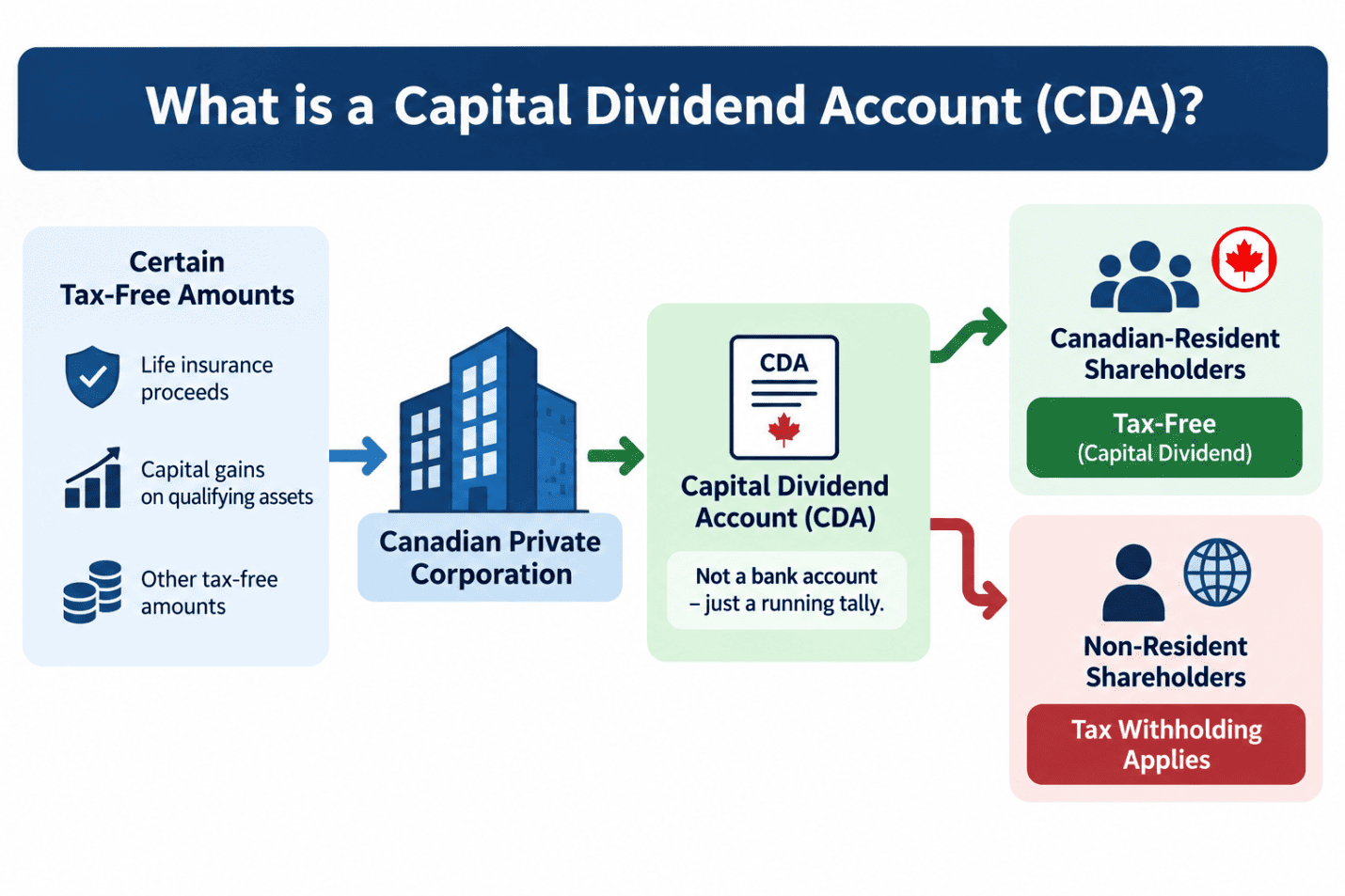
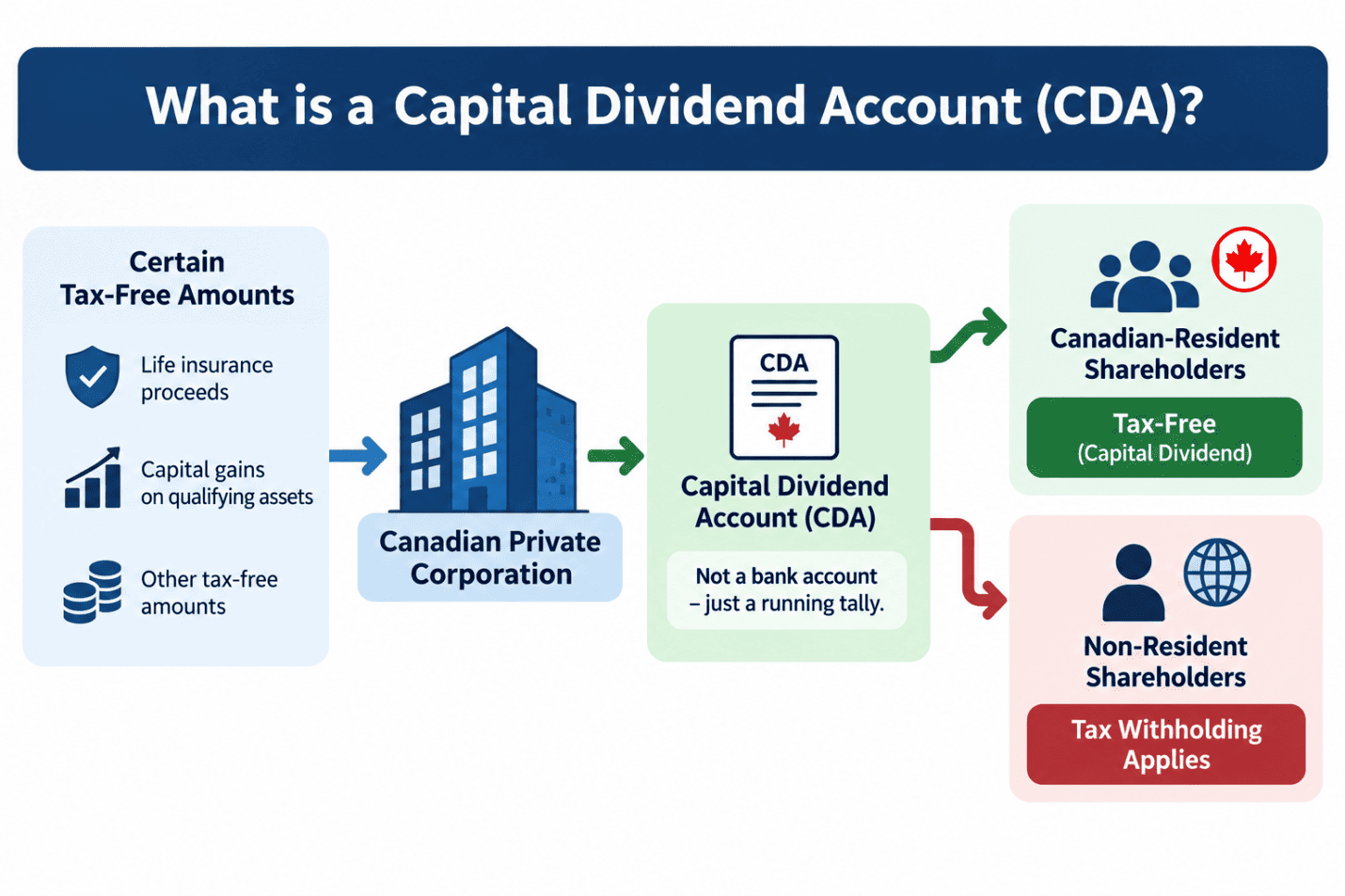
The CDA is a notional tax account. It isn't a bank account; it's a
running tally of certain tax-free amounts received by a private corporation
resident in Canada. As long as the balance is positive, the corporation can pay
it to its Canadian-resident shareholders as a capital dividend, which they
receive tax-free. Tax withholding applies if a capital dividend is paid to a
non-resident.
What goes into the balance?
Source: Canada Life. Note 2: CDA rules
changed in 2016 for policies transferred between non-arm's-length parties from
January 1, 2000 to March 21, 2016, so additional rules may apply to those
policies.
Three main amounts add to the balance: life insurance death benefits
(less the policy's adjusted cost basis), the non-taxable portion of capital
gains, and capital dividends received from other Canadian private corporations
or trusts. The balance can then be paid out to a deceased shareholder's estate
and to other shareholders.
How life insurance adds to the CDA
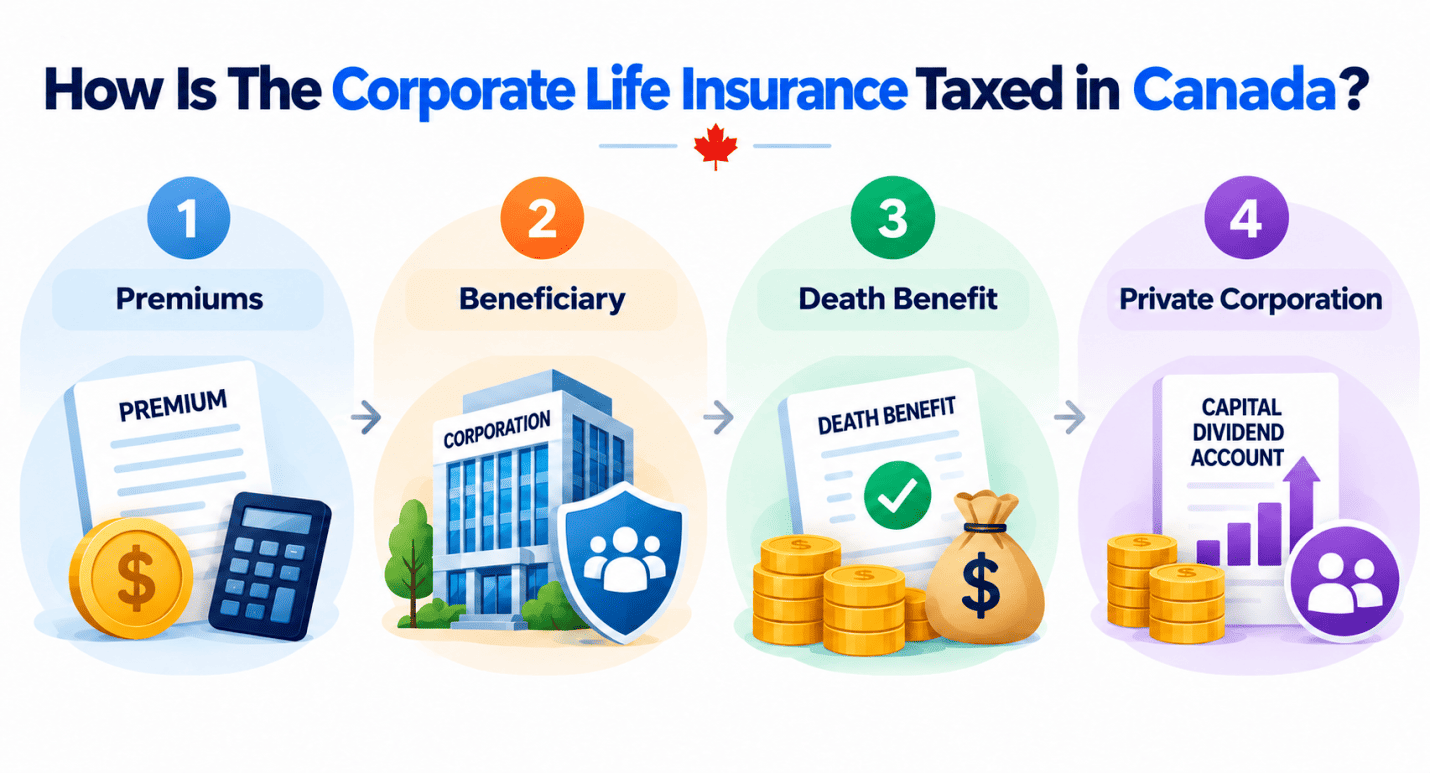
When a corporation owns a life insurance policy, it's usually also
the beneficiary. When the insured person dies, the corporation receives the
death benefit, and its CDA is credited with the death benefit less the policy's
adjusted cost basis (ACB).
The ACB is usually the total premiums paid minus an assumed
mortality cost set out in the Income Tax Act. Over time, the ACB often falls to
zero, and the full death benefit can then be credited to the CDA.
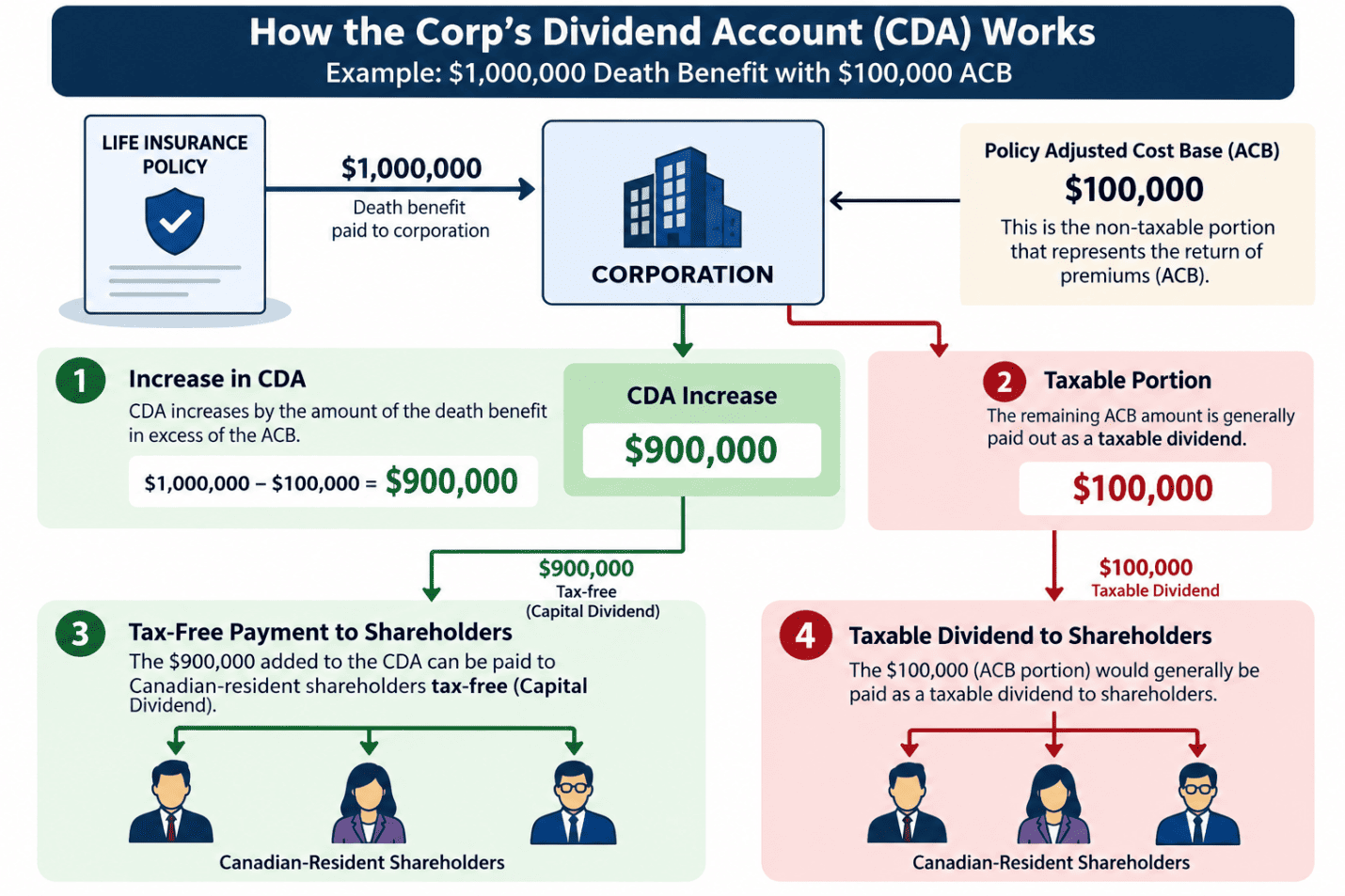
For example, if a corporation receives a $1,000,000 death benefit on
a policy with an ACB of $100,000, its CDA increases by $900,000. That amount
can be paid to Canadian-resident shareholders tax-free. The remaining $100,000
would generally be paid as a taxable dividend.
Source: Canada Life. Note 2: CDA rules
changed in 2016 for policies transferred between non-arm's-length parties from
January 1, 2000 to March 21, 2016, so additional rules may apply to those
policies.
Three main amounts add to the balance: life insurance death benefits
(less the policy's adjusted cost basis), the non-taxable portion of capital
gains, and capital dividends received from other Canadian private corporations
or trusts. The balance can then be paid out to a deceased shareholder's estate
and to other shareholders.
How life insurance adds to the CDA
When a corporation owns a life insurance policy, it's usually also
the beneficiary. When the insured person dies, the corporation receives the
death benefit, and its CDA is credited with the death benefit less the policy's
adjusted cost basis (ACB).
The ACB is usually the total premiums paid minus an assumed
mortality cost set out in the Income Tax Act. Over time, the ACB often falls to
zero, and the full death benefit can then be credited to the CDA.
For example, if a corporation receives a $1,000,000 death benefit on
a policy with an ACB of $100,000, its CDA increases by $900,000. That amount
can be paid to Canadian-resident shareholders tax-free. The remaining $100,000
would generally be paid as a taxable dividend.
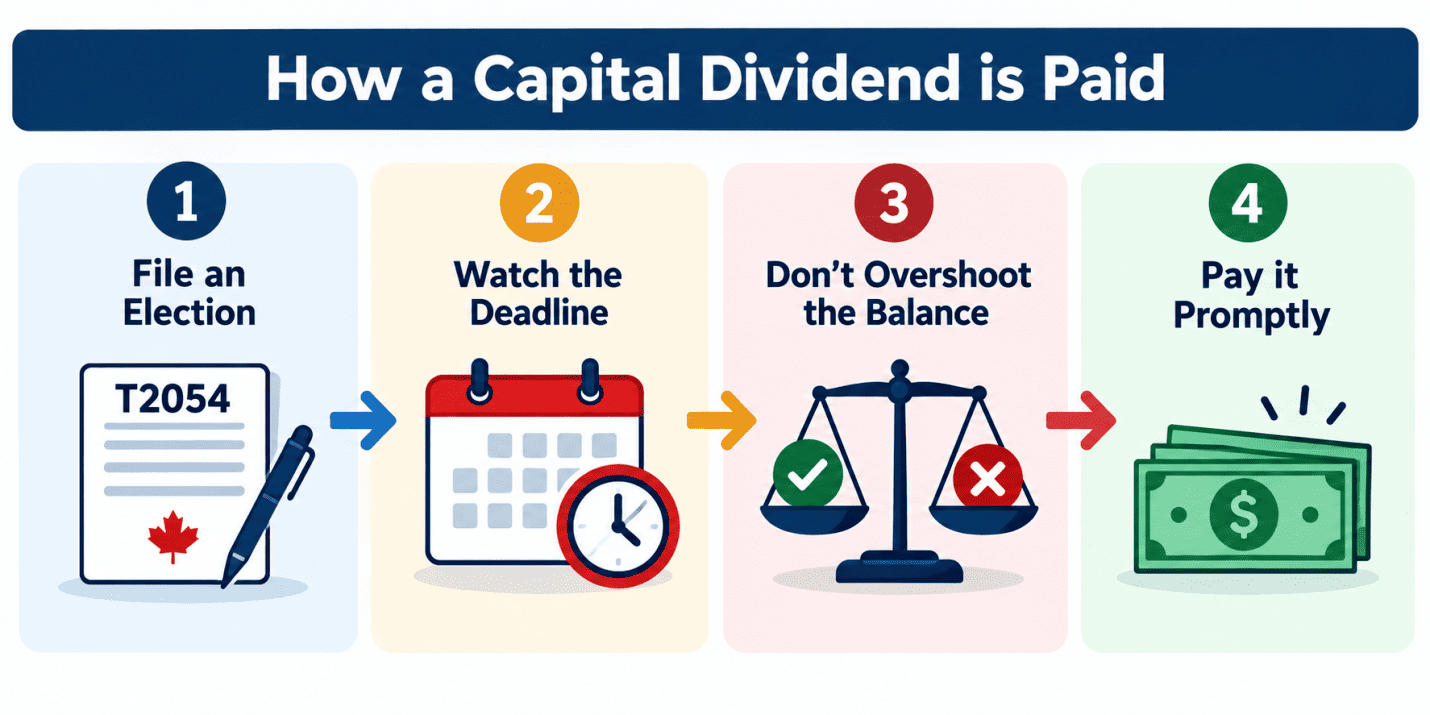
•
File an election. The corporation files form T2054 with the Canada Revenue Agency,
along with the directors' resolution and a calculation of the CDA balance. In
Quebec, an election is also filed with Revenu Québec.
•
Watch the deadline. The election is due by the earlier of the day the dividend becomes
payable and the day it's first paid. Late elections are allowed, but a penalty
applies.
•
Don't overshoot the balance. If the dividend is larger than the CDA balance, the corporation can
face a 60% tax on the excess. An election can often treat the excess as a
taxable dividend instead, but it's better to confirm the balance first.
•
Pay it promptly. Later transactions, such as capital losses, can reduce the CDA, so
paying the dividend early helps protect the balance.
Why it matters for business owners
The CDA means corporate ownership doesn't have to come at your
family's expense. Your corporation pays premiums with lower-taxed dollars, and
the death benefit can still reach shareholders largely tax-free. Learn more
about why life insurance belongs in your business plan [LINK: Main blog: Life Insurance
for Business Owners].
At Wescan Insurance Brokers, we help business owners understand how
corporate-owned life insurance fits into their plan. Contact our
team, and involve your accountant before any capital dividend is declared.
This article is for general information only. It is not legal, tax
or financial advice. Policy terms, eligibility, exclusions and tax treatment
vary. Speak with qualified insurance, legal, accounting and tax professionals
about your situation.
References
1.
Canada Life. Life Insurance and the Capital Dividend
Account (brochure 46-4817). March 2021.
2.
Canada Life, Tax and Estate Planning Group. Corporate-owned life insurance. September 2021.
3.
Canada Revenue Agency. Income Tax Folio S3-F2-C1, Capital
Dividends.
4.
Tax Partners. Tax-Free Capital Dividends: Elections
and Penalties.
5.
CPA British Columbia. Capital Dividend Accounts: Practical
Approaches to Dealing with Errors. October 2025.