
Claim Workflow
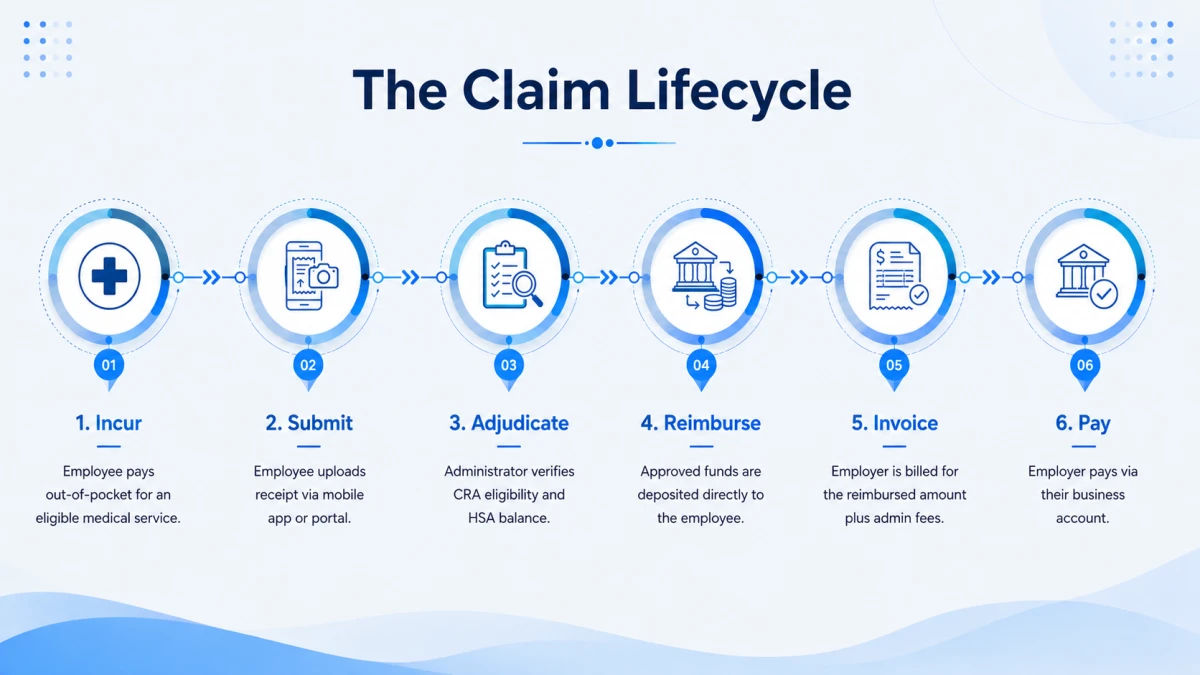
1. Employee incurs an eligible expense
Pays out of pocket for a medical, dental, or vision service from a licensed provider. Expense must quality under the Income Tax Act.
Examples: prescription glasses, orthodontics, physiotherapy, prescription drugs.
2. Employee submits the claim
Uploads the receipt through the HSA administrator’s online portal or mobile app, including provider details, date of service, and amount paid.
Most administrators support direct mobile photo uploads.
3. HSA administrator adjudicates the claim
Verifies CRA eligibility, confirms available HSA balance, and reviews supporting documents. The claim is approved, partially approved, or declined.
Typical turnaround two to five business days.
4. Employee is reimbursed tax-free
Approved claims are deposited directly into the employee’s bank account. A statement of benefits is issued and the HSA balance is updated.
Reimbursement is not reported as taxable income.
5. Employer is invoiced
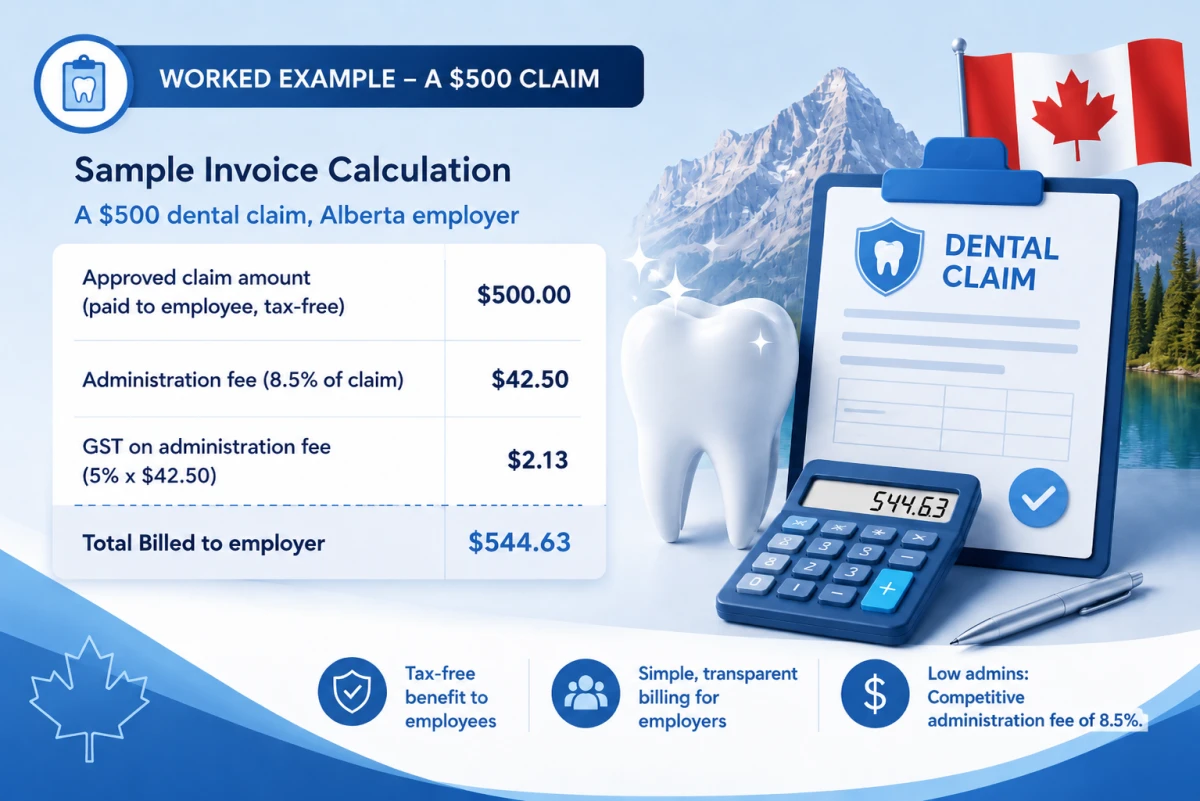
The administrator bills the employer for the reimbursed claim plus an 8.5% administration fee and applicable provincial tax.
Pay-as-you-go: employer is only billed for claims actually paid.
6. Employer pays via their business account
The administrator processes a pre-authorized debit from the employer's business bank account to cover the reimbursed claim amount, administration fee, and applicable taxes. Payment is triggered automatically following invoice generation.
No manual transfers required: the withdrawal is initiated by the administrator on a per-claim basis.
Why the administration fee exists
The 8.5% fee covers claims adjudication, CRA compliance, banking, employee portal access, application of transaction logistics and reporting. Because the HSA operates on a pay-as-you-go basis, the administrator only earns this fee when claims are actually paid – there are no monthly premiums and no float held by the carrier.
Tax treatment for the employer
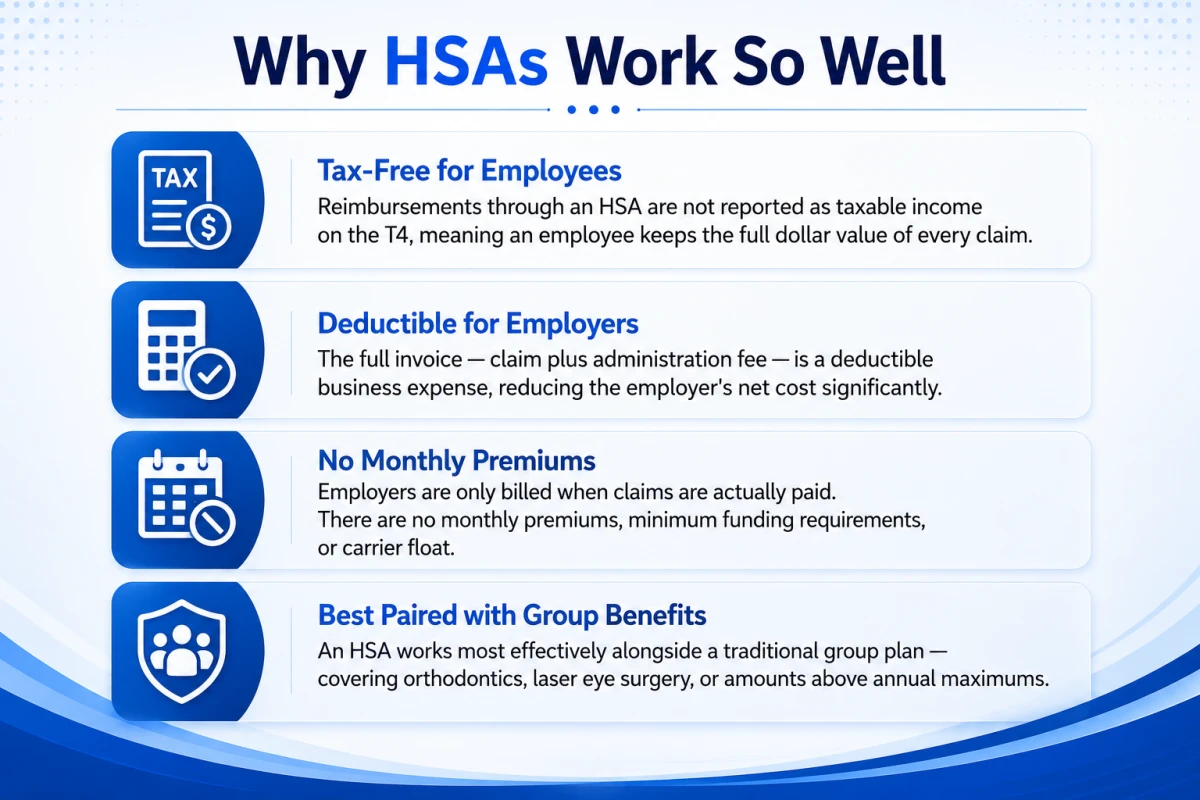
The full amount on the invoice- the claim, the administration fee, and the GST – is a deductible business expense. This makes the HSA significantly more tax-efficient than reimbursing the same expense as a taxable bonus or salary top-up.
An HSA turns an ordinary medical bill into a tax-efficient benefit for both employer and employee — with no monthly premiums and no carrier float.
Key Plan Principles
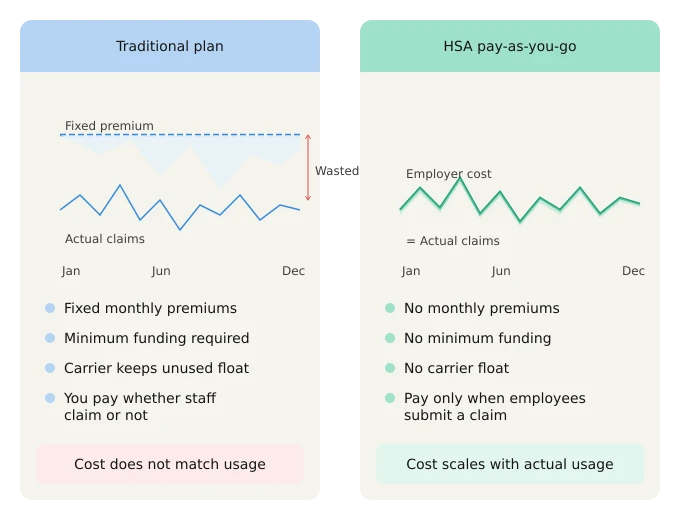
Pay-as-you-go funding
The employer is invoiced only when claims are paid. There is no monthly premium, no minimum funding requirement, and no carrier float. Costs scale directly with actual employee plan utilization.
Tax-free to the employee
Reimbursements paid through an HSA are not reported as taxable income on the employee’s T4. A $500 reimbursement equals $500 in the employee’s pocket – the equivalent gross salary increase to deliver the same after tax-benefit would be substantially higher.
Best used as a complement
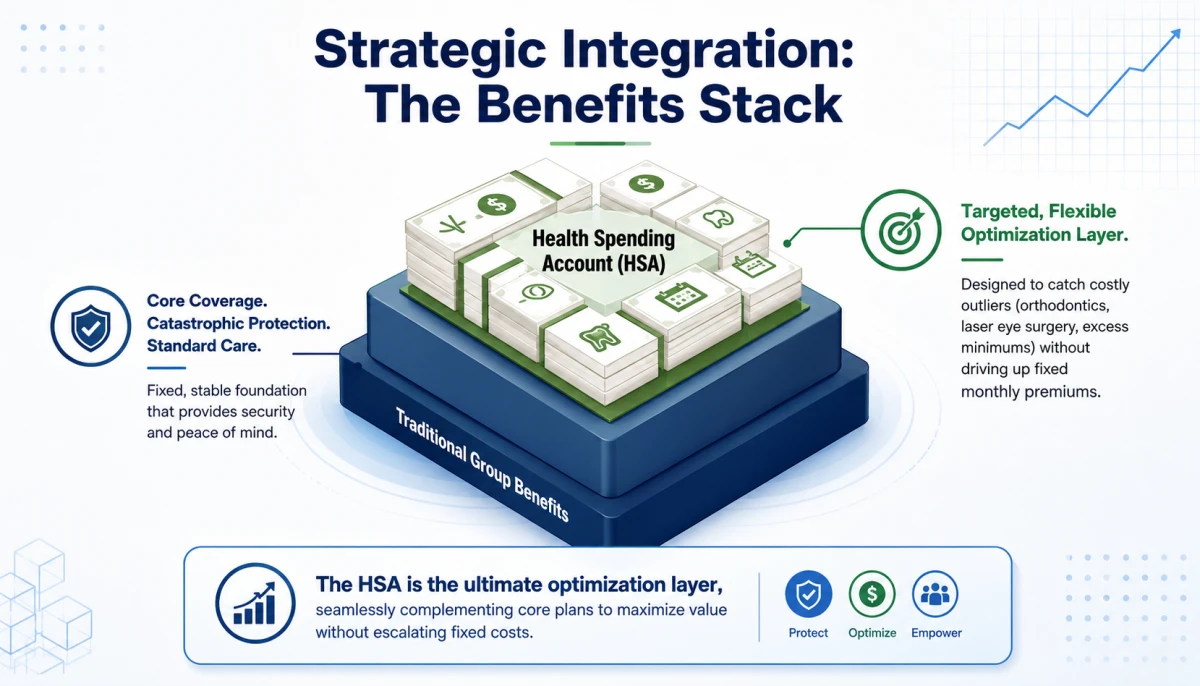
An HSA is most effective when paired with a traditional group benefits plan, covering items the core plan does not (such as orthodontics, laser eye surgery, or amounts over the annual maximum) rather than acting as a standalone solution.
CRA-defined eligibility
Eligible expenses are governed by the Canada Revenue Agency’s medical expense list under the Income Tax Act. The administrator enforces this list at the adjudication stage, protecting the plan’s tax-favoured status.
Ready to Add an HSA to Your Benefits Plan?
Wescan Insurance helps Alberta businesses set up and administer Health Spending Accounts with ease. Talk to an advisor today and find out how much your team could save.
You may be interested in
Alberta Bill 11: What It Means for Your Benefits Coverage Starting October 1, 2026
If you have coverage through your employer's benefits plan and an Alberta govern...

How to Choose the Best Health Insurance Broker in Alberta for Your Business
Choosing a health insurance broker shapes how your employees experience your bus...

Understanding Wellness Spending Accounts: How WSAs Work in Canada
A Wellness Spending Account (WSA) offers Canadian employers a straightforward wa...