What Is Key Person Insurance? Protecting Your Business From the Loss of a Key Person
Every small business has people it can't easily do without. It might be you, a co-founder, a top salesperson or the one technician who knows how everything works. Key person insurance protects the business if one of those people dies.
How key person insurance works
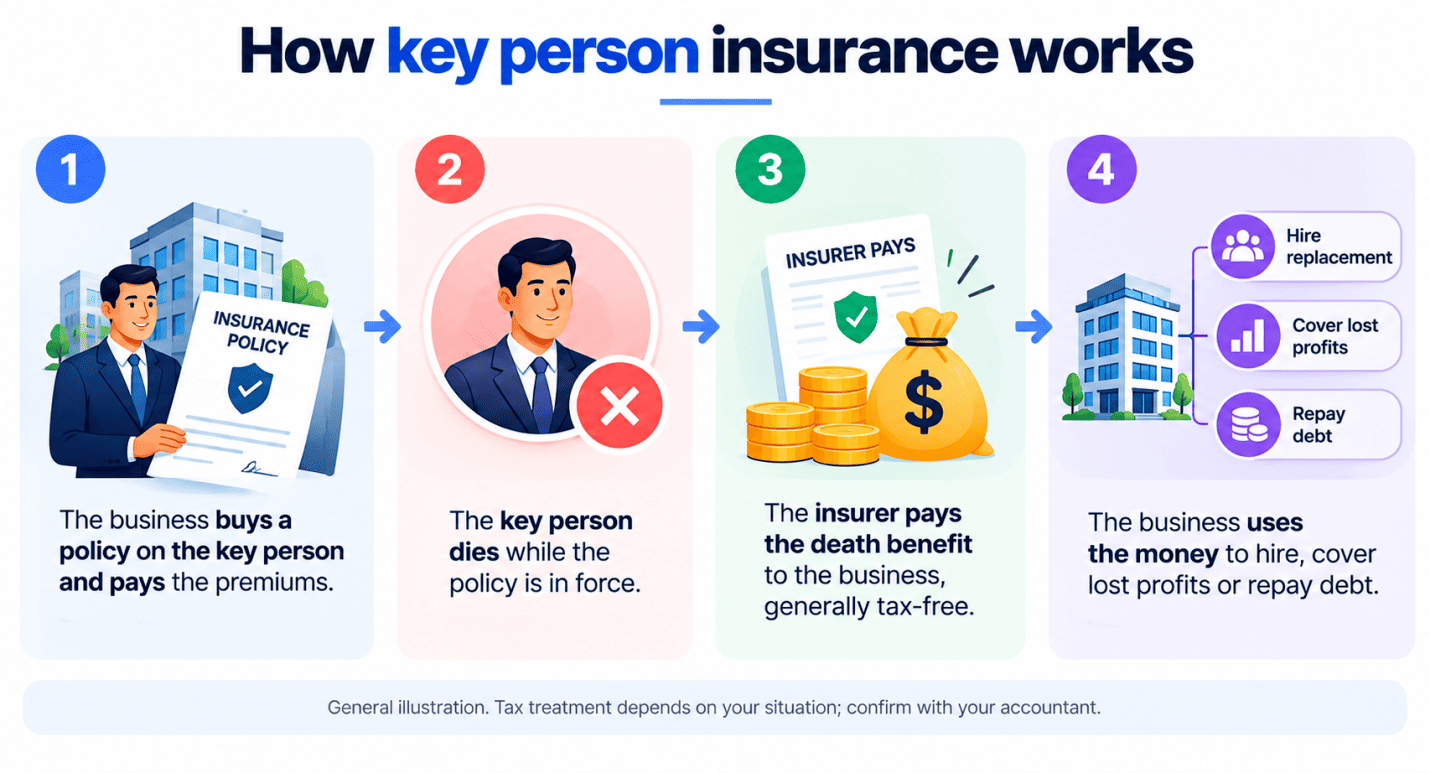
Key person insurance is a life insurance policy that a business buys
on an important owner or employee. The business owns the policy, pays the
premiums and is the beneficiary. If the key person dies, the insurer pays the
benefit to the business, not to the person's family.
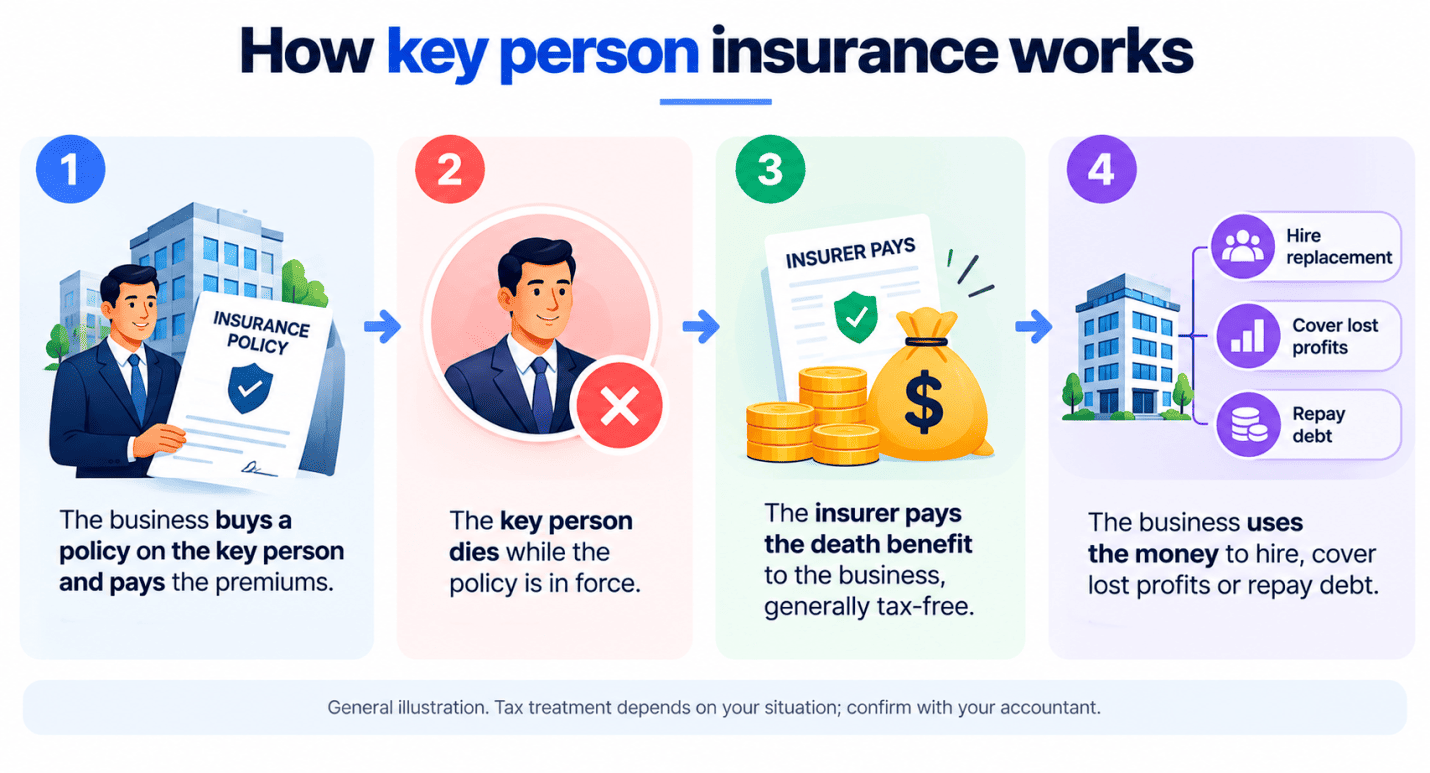
The business can use that money wherever it's needed most, such as:
•
Recruiting and training a
replacement
•
Making up for lost revenue or profits
•
Paying down loans or lines of
credit
•
Reassuring lenders, suppliers
and clients that the business is stable
Who Counts as a Key Person?
A key person is anyone whose death would cause a significant
financial loss to the business. To find yours, ask:
•
Who brings in a large share of
revenue or holds important client relationships?
•
Who has specialized skills or
knowledge that would be hard to replace?
•
Who has personally guaranteed
business loans?
•
Who would lenders or investors
worry about losing?
In many small businesses, the answer is the owner.
How Much Coverage Does a Business Need?
There's no single formula. Common approaches include:
•
Replacement cost: what it would cost to recruit, hire and train someone new, plus
lost productivity in the meantime
•
Contribution to profits: how much profit the business would lose while it recovers
•
Multiple of salary: a multiple of the key person's compensation
•
Debt coverage: enough to repay loans the key person has guaranteed
Insurers will want the amount to be financially justified, so an
advisor can help you land on a realistic number.
Term or Permanent Coverage?
Many businesses use term life insurance for key person coverage
because it's more affordable and can match a specific period, such as the
length of a loan. Permanent coverage may make more sense when the need is long
term, or when the policy will also fund a buy-sell agreement.
How is it Taxed in Canada?
•
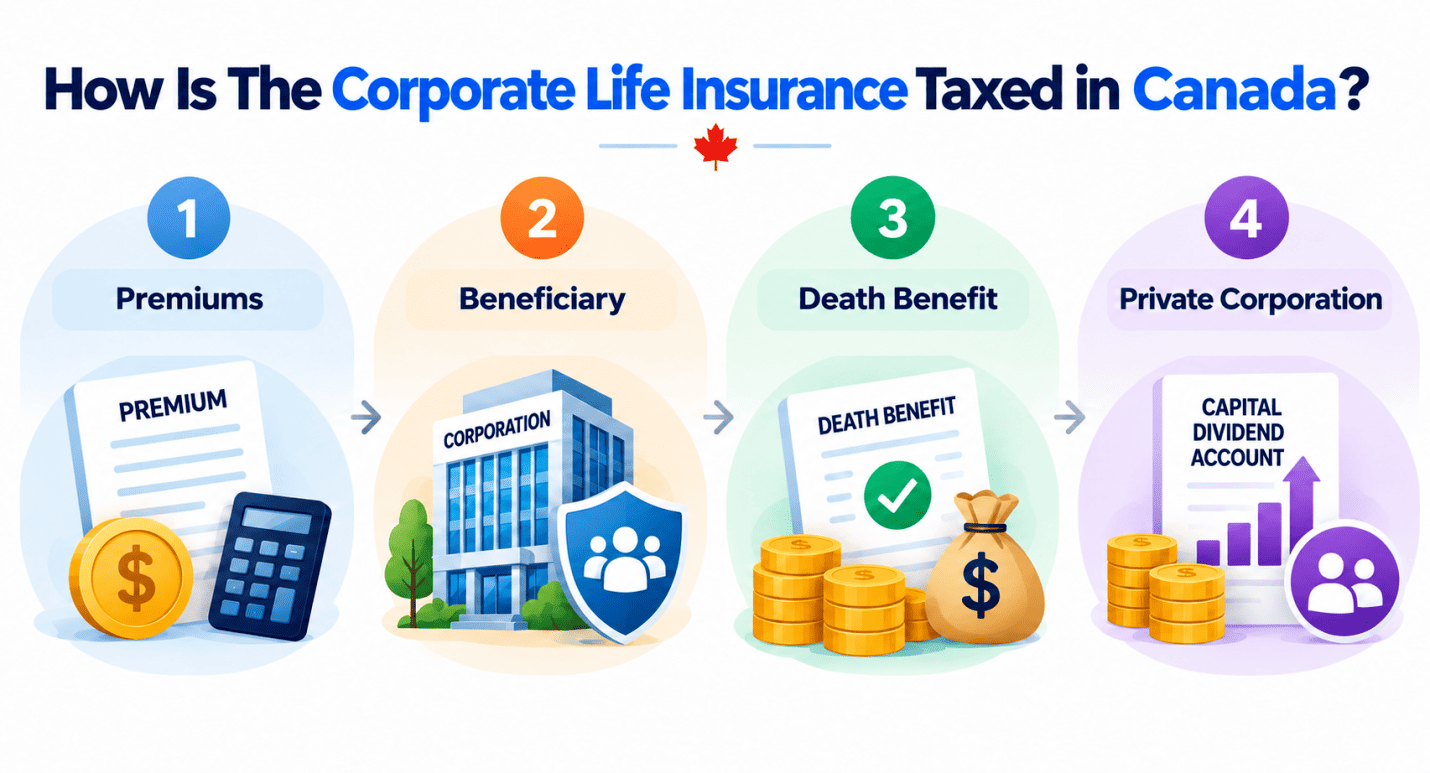
Premiums are generally not tax-deductible, unless a lender requires the
policy as collateral for a loan. An incorporated business pays them with
lower-taxed corporate dollars, which usually costs less than paying personally.
•
The beneficiary should usually be the corporation. If a shareholder is named
instead, the premiums would likely be a taxable shareholder benefit.
•
The death benefit is generally received by the business tax-free.
•
For a private corporation, the death benefit less the policy's adjusted cost basis is
generally added to the capital dividend account ,
which allows tax-free capital dividends to Canadian-resident shareholders.
Your accountant can confirm how these rules apply to your business.
Other things to know
•
The key person must agree to be
insured and usually completes a medical application.
•
If the key person leaves, the
business can usually cancel the policy or, in some cases, transfer it to the
person. A transfer can have tax consequences, so get advice first.
•
Some businesses also add key
person disability or critical illness coverage, since a serious illness or
injury can be just as disruptive as a death.
Key person insurance is one part of a broader plan. Learn more about
why life insurance belongs in your business plan [LINK: Main blog: Life Insurance for Business
Owners].
At Wescan Insurance Brokers, we help business owners understand how
life insurance fits into their protection plan. Contact our team to talk
about the people your business depends on.
This article is for general information only. It is not legal, tax
or financial advice. Policy terms, eligibility, exclusions and tax treatment
vary. Speak with qualified insurance, legal, accounting and tax professionals
about your situation.
References
1.
Canada Life, Tax and Estate Planning Group. Corporate-owned life insurance. September 2021.
2.
Sun Life Canada. Are your insurance premiums
tax-deductible?
3.
Canada Revenue Agency. Income Tax Folio S3-F2-C1, Capital
Dividends.